6.5 KiB
Install OpenVINO™ Runtime on Linux From YUM Repository
@sphinxdirective
.. meta:: :description: Learn how to install OpenVINO™ Runtime on Linux operating system, using the YUM repository.
.. note::
Note that the YUM distribution:
- offers both C/C++ and Python APIs
- does not offer support for GNA and NPU inference
- is dedicated to Linux users only
- additionally includes code samples
.. tab-set::
.. tab-item:: System Requirements :sync: system-requirements
  | Full requirement listing is available in:
  | :doc:`System Requirements Page <system_requirements>`

  .. note::

     OpenVINO RPM packages are compatible with and can be run on the following operating systems:

     - RHEL 8.2 and higher
     - Amazon Linux 2022 and 2023
     - Rocky Linux 8.7, 8.8 and 9.2
     - Alma Linux 8.7, 8.8 and 9.2
     - Oracle Linux 8.7, 8.8 and 9.2
     - Fedora 29 and higher up to 40
     - OpenEuler 20.03 and 22.03
     - Anolis OS 8.6 and 8.8
     - CentOS Stream 8 and 9
.. tab-item:: Processor Notes :sync: processor-notes
  | To see if your processor includes the integrated graphics technology and supports iGPU inference, refer to:
  | `Product Specifications <https://ark.intel.com/>`__
.. tab-item:: Software :sync: software
  * `CMake 3.13 or higher, 64-bit <https://cmake.org/download/>`_
  * GCC 8.2.0
  * `Python 3.8 - 3.11, 64-bit <https://www.python.org/downloads/>`_
Install OpenVINO Runtime ########################
Step 1: Set Up the Repository +++++++++++++++++++++++++++++
-
Create a YUM repository file (
openvino-2023.repo) in the/tmpdirectory as a normal user:.. code-block:: sh
tee > /tmp/openvino-2023.repo << EOF [OpenVINO] name=Intel(R) Distribution of OpenVINO 2023 baseurl=https://yum.repos.intel.com/openvino/2023 enabled=1 gpgcheck=1 repo_gpgcheck=1 gpgkey=https://yum.repos.intel.com/intel-gpg-keys/GPG-PUB-KEY-INTEL-SW-PRODUCTS.PUB EOF
-
Move the new
openvino-2023.repofile to the YUM configuration directory, i.e./etc/yum.repos.d:.. code-block:: sh
sudo mv /tmp/openvino-2023.repo /etc/yum.repos.d
-
Verify that the new repository is set up properly.
.. code-block:: sh
yum repolist | grep -i openvino
You will see the available list of packages.
To list available OpenVINO packages, use the following command:
.. code-block:: sh
yum list 'openvino*'
Step 2: Install OpenVINO Runtime Using the YUM Package Manager ++++++++++++++++++++++++++++++++++++++++++++++++++++++++++++++
Install OpenVINO Runtime
.. tab-set::
.. tab-item:: The Latest Version :sync: latest-version
  Run the following command:

  .. code-block:: sh

     sudo yum install openvino
.. tab-item:: A Specific Version :sync: specific-version
  Run the following command:

  .. code-block:: sh

     sudo yum install openvino-<VERSION>.<UPDATE>.<PATCH>

  For example:

  .. code-block:: sh

     sudo yum install openvino-2023.1.0
Check for Installed Packages and Version
Run the following command:
.. code-block:: sh
yum list installed 'openvino*'
.. note::
You can additionally install Python API using one of the alternative methods (:doc:conda <openvino_docs_install_guides_installing_openvino_conda> or :doc:pip <openvino_docs_install_guides_installing_openvino_pip>).
Congratulations! You've just Installed OpenVINO! For some use cases you may still
need to install additional components. Check the
:doc:list of additional configurations <openvino_docs_install_guides_configurations_header>
to see if your case needs any of them.
With the YUM distribution, you can build OpenVINO sample files, as explained in the
:doc:guide for OpenVINO sample applications <openvino_docs_OV_UG_Samples_Overview>.
For C++ and C, just run the build_samples.sh script:
.. tab-set::
.. tab-item:: C++ :sync: cpp
  .. code-block:: sh

     /usr/share/openvino/samples/cpp/build_samples.sh
.. tab-item:: C :sync: c
  .. code-block:: sh

     /usr/share/openvino/samples/c/build_samples.sh
Uninstalling OpenVINO Runtime ##############################
To uninstall OpenVINO Runtime via YUM, run the following command based on your needs:
.. tab-set::
.. tab-item:: The Latest Version :sync: latest-version
  .. code-block:: sh

     sudo yum autoremove openvino
.. tab-item:: A Specific Version :sync: specific-version
  .. code-block:: sh

     sudo yum autoremove openvino-<VERSION>.<UPDATE>.<PATCH>

  For example:

  .. code-block:: sh

     sudo yum autoremove openvino-2023.1.0
What's Next? #############
Now that you've installed OpenVINO Runtime, you're ready to run your own machine learning applications! Learn more about how to integrate a model in OpenVINO applications by trying out the following tutorials:
-
Try the
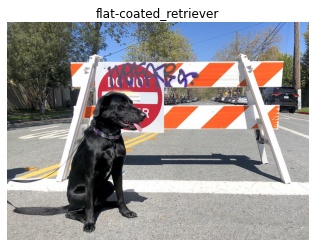
C++ Quick Start Example <openvino_docs_get_started_get_started_demos.html>_ for step-by-step instructions on building and running a basic image classification C++ application... image:: https://user-images.githubusercontent.com/36741649/127170593-86976dc3-e5e4-40be-b0a6-206379cd7df5.jpg :width: 400
-
Visit the :ref:
Samples <code samples>page for other C++ example applications to get you started with OpenVINO, such as:Basic object detection with the Hello Reshape SSD C++ sample <openvino_inference_engine_samples_hello_reshape_ssd_README.html>_Automatic speech recognition C++ sample <openvino_inference_engine_samples_speech_sample_README.html>_
You can also try the following things:
- Learn more about :doc:
OpenVINO Workflow <openvino_workflow>. - To prepare your models for working with OpenVINO, see :doc:
Model Preparation <openvino_docs_model_processing_introduction>. - See pre-trained deep learning models in our :doc:
Open Model Zoo <model_zoo>. - Learn more about :doc:
Inference with OpenVINO Runtime <openvino_docs_OV_UG_OV_Runtime_User_Guide>. - See sample applications in :doc:
OpenVINO toolkit Samples Overview <openvino_docs_OV_UG_Samples_Overview>. - Take a glance at the OpenVINO product home page: https://software.intel.com/en-us/openvino-toolkit.
@endsphinxdirective